
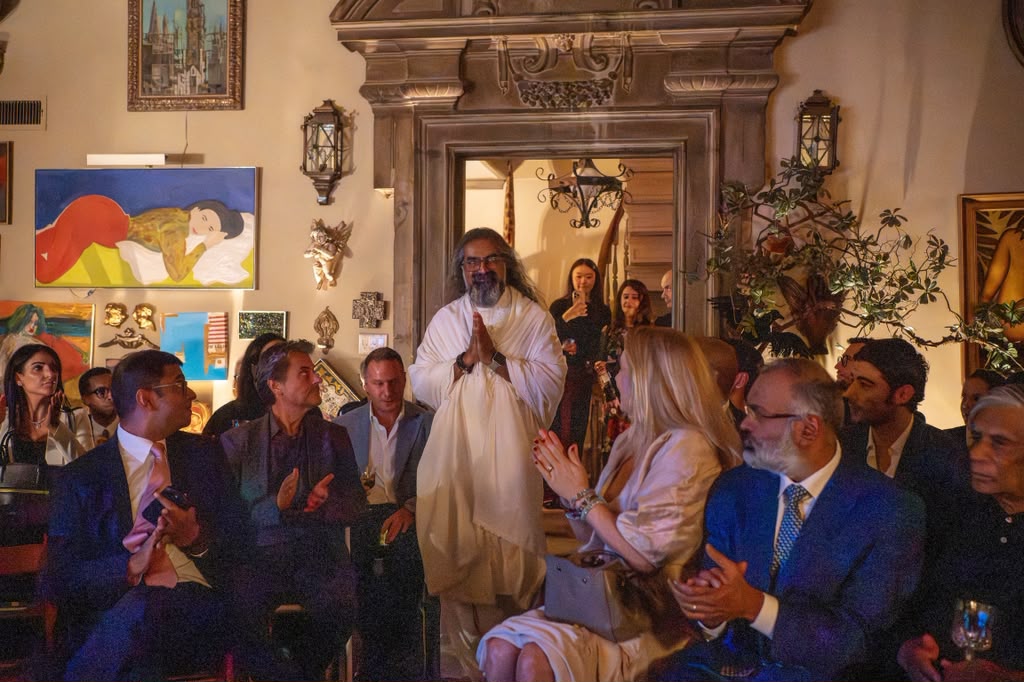
Bhaskar Digital features Mohanji with New York’s Diplomatic Community
At an evening hosted by the Society of Foreign Consuls in New York on October 1, the spiritual leader and humanitarian spoke about leadership, self-connection, technology and global responsibility.
“We have about 30,000 days,” spiritual leader and humanitarian Brahmarishi Dr. Mohanji told diplomats and business leaders in New York. “That’s it. It’s not extendable; we cannot extend it.”
He invited guests to reflect on how they use their time, abilities and influence, and what they hope to achieve in the time available to them.
Mohanji was the guest of honour and keynote speaker at the VIP Diplomacy & Leadership Evening, hosted by Ambassador Dr. Vladimir Božović, President of the Society of Foreign Consuls in New York, and Dame Gloria Starr Kins, President and Founder of Society & Diplomatic Review. The event brought together diplomats from more than 40 countries, alongside representatives from business, academia, medicine, culture and philanthropy.
In her remarks, Dame Gloria shared her family’s experience during the Second World War, when consular assistance and visas helped her relatives escape Nazi persecution and reach the United States. Her account highlighted the impact diplomatic services can have on individual lives and families.
A central theme of Mohanji’s address was the need to look beyond national boundaries when considering global challenges. “Now we look at the world as countries… but we should look at the world as a whole,” he said.
Self-connection was another key theme. “My core teaching is self-connection,” he said, explaining the importance of understanding and accepting one’s nature, uniqueness and potential. He linked this awareness to leadership and diplomacy, particularly when decisions carry human consequences amid conflict and social division.
Mohanji also spoke about a gathering in South Africa that brought together representatives of Indigenous communities from Hawaii, Alaska, New Zealand, the Arctic and the Amazon. Referring to them as “wisdom keepers”, he emphasised preserving cultural traditions, protecting nature and creating greater recognition for Indigenous knowledge.
On technology, he noted that dependence on digital devices can sometimes reduce meaningful interaction, even within families. As artificial intelligence continues to influence daily life and work, he highlighted the importance of compassion, intuition and human connection.
Questions and an open discussion followed, before Mohanji met guests for informal one-to-one conversations. For a room accustomed to thinking in terms of nations, the evening ended with a more personal question: how would each person choose to use their 30,000 days?